
Asia’s next white space is the invisible majority
For more than a decade, sustainability reshaped corporate strategy. Carbon went from a footnote to a board metric in a decade, as leaders recognised systemic change would drive long-term value. Longevity now demands the same attention - not a future trend, but a force already influencing productivity, resilience and growth.
We are living longer and better lives. The demographic megatrends have been visible for decades, and their consequences will affect us all, as leaders in business and government, and as individuals moving through multi-stage lives. Longevity is increasingly today's reality and yet remains a blind spot for many.
Ken Dychtwald highlights that two-thirds of everyone who has ever lived past 65, in the entire history of the world, is alive today. And yet our systems remain designed for a 70-year life. By 2050, WHO estimates 22% of the world's population will be over 60.
It's time for us to seek out the invisible majority, and reframe ageing, rethink strategy, and redesign advantage. Longevity needs recognising as a strategic imperative – we need intentional redesign of the playbooks made for 100-year lives.
The Customer - Part One of The Invisible Majority
The invisible majority has two halves. The first is the consumer who often reports feeling unseen: 78% of over-50s say they feel unrepresented or misrepresented by the brands marketing to them.
The scale of disengagement is hard to ignore. AARP's Global Longevity Economy Outlook puts the over-50 cohort's contribution to global GDP at an estimated $45 trillion, with their share of global consumer spending at roughly 50% today, rising to 59% by 2050. Yet Nielsen research shows only 5% of advertising is built for them.
UN ESCAP highlights Asia-Pacific carries the weight of this shift. The region is home to roughly 503 million people aged 65 and older - around 60% of the world's senior population. And Singapore is projected to cross the UN's super-aged threshold this year -21% of its population aged 65 or older - joining South Korea, Japan, Germany, Greece, Finland, Italy and others already in that category.
An outdated narrative treats ageing as a story about decline. It isn't. The 50 to 75 group increasingly holds high purchasing power, ongoing careers, substantial assets and active lives.
And this is not one homogeneous group. Research from Singapore ageing expert Dr Angelique Chan shows older populations are growing more diverse, not less, while much of the language still used to describe them, from retirement to silver tsunami, hasn't caught up.
Interestingly the intergenerational spend is condensing in fewer wallets. Women in this cohort are often the ones making a higher share of purchasing decisions - not only for themselves, but for their children, parents and in-laws. One customer. Multiple households. Multiple generations of influence.
The Underutilised Workforce -Part Two of The Invisible Majority
This is the second half of the invisible majority - the untapped, overlooked workforce at 50+ who often want to work, need to work, but struggle to access meaningful work.
Two forces are driving change in parallel: AI is rewriting what skills, roles and jobs look like, and workforce pipelines are contracting as worker median age rises. The only certainty we have about the future of work is that it will look different in ten years for almost everyone. And yet our human capital systems are outdated and designed for much shorter working lives
Alongside these forces sits one of the most common issues businesses cite: the skills gap. The IMF finds cognitive capacity at 70 today matches that of a 53-year-old in 2000. Yet job ads are still coded for early-career energy, promotion curves still peak at 40 to 45, planning assumptions are built on shorter lives and training investment still falls away well before careers do.
The World Economic Forum's 2025 Future of Jobs Report finds that skills requiring nuanced judgement and complex problem-solving remain largely resistant to AI substitution. The lived experience and contextual knowledge mature workers hold is often exactly what AI adoption needs most -and remains the most underused asset organisations already have. However, our assumptions around AI literacy are bound with bias. AARP research finds 52% of workers aged 50-plus are already familiar with AI, and 49% want to learn more.
These are design issues. Organisations design deliberately for youth, then for parents, but not for the over-50s. That same intentionality using universal design principles, needs applying to a cohort that will soon make up a much larger share of the workforce than it does today. Much needs to be done and programmes like Singapore's 2025 tripartite initiative with government, employer and union moving together on mature workers, shows what progress can look like when investment is genuinely shared.
We need to rethink Workspan and rearchitect the work contract with age decoupled.
The Third Quarter Advantage
Most ageing population strategies focus on the 75+ cohort - framed almost entirely around decline, healthcare and support. Retirement, too, is a melting pot of misaligned expectations that are dominated by financial sustainability. They're important frames. But also, incomplete ones.
What about the 50 to 75 year olds still building, not winding down, not done yet? McKinsey Global Institute estimates that adding just ten healthy midlife years globally could unlock trillions of dollars in economic value. More frequently referred as the third quarter of life, it’s where the white space sits and where the made-up notion of retirement is ready for disruption.
This isn't about serving an ageing population. It's about enabling a growing cohort of experienced, healthy, increasingly affluent adults to extend their impact, wellbeing, learning, purpose and connections through longer fuller lives. What exists today is largely financial products built for retirement, travel for retirees, and health products built around managing decline.
Longevity led innovation and growth opportunities across products and services remain largely unexplored. Platforms for mid-life reskilling and employment extension, coaching for later in life entrepreneurs, wellness and performance optimisation, education reimagined for pleasure rather than credentials, and community built around relationships and purpose. Each of these examples highlight new white space.
These blind spots can be turned to a competitive advantage once the longevity lens is applied intentionally.
The Lens Test
Longevity is not one problem. It is an economic issue, a design issue, and a human issue - it's a wicked problem! Sustainability is showing us the way: systemic change is required and real value sits in thinking longer term, and beyond shareholder return alone. It needs business, government, the third sector and individuals moving together.
How might longevity already be shaping the performance, resilience and growth profile of your business?
Do modern corporations have a responsibility to remove the barriers to increased Workspan for societal benefit?
If our own working lives, for those reading this, run for another 20 to 30 years, what's your plan for this gift of a longer life?
The data is clear. The white space is there for the taking.
The question is who will use the longevity lens to their advantage and find the invisible majority ready and waiting?
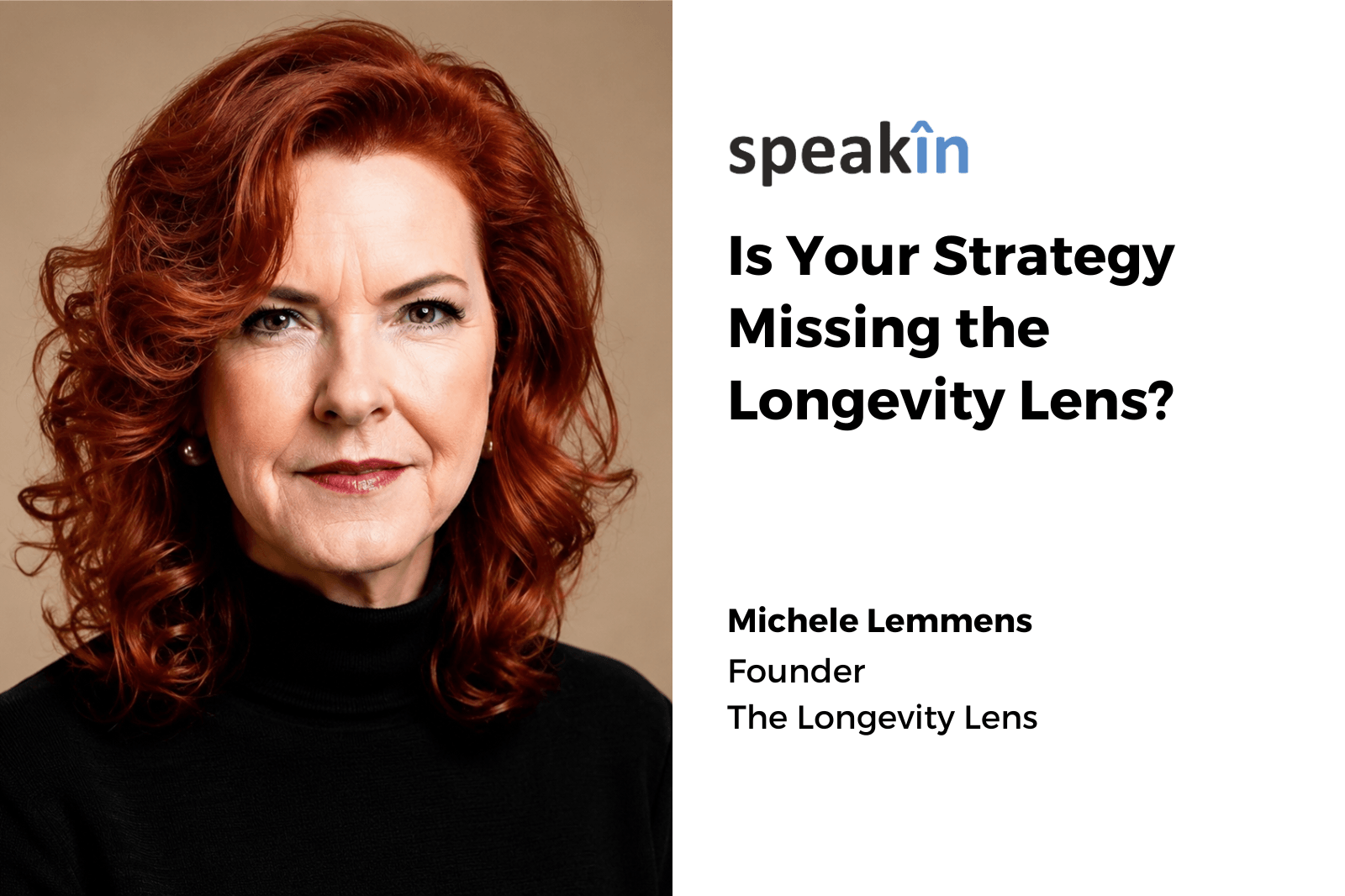
Michele Lemmens
Founder, The Longevity Lens
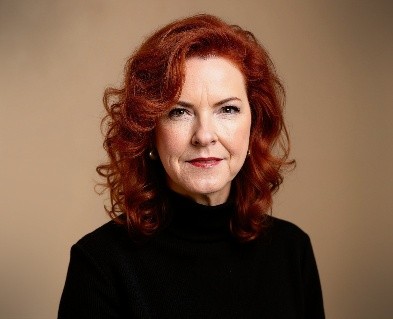
Michele Lemmens is a trusted strategic advisor to senior executives, boards, governments and the third sector with a track record of igniting and delivering strategic and operational outcomes across complex, multi-stakeholder environments. Reframing the narrative and around longevity, productivity and future workforces is the focus of her current role – it’s an economic, design, and human issue. In her prior role as APAC CTO and Head of Business Sustainability at Tata Consultancy Services (TCS), Michele has partnered with C-suite leaders across mature and emerging markets to drive impact at the intersection of technology, sustainability, and innovation. Her work spans pioneering ESG initiatives, building innovation ecosystems, and launching purpose-driven ventures globally, including establishing a women-only business process centre in Saudi Arabia. She has established and scaled eight strategic ventures from concept across corporate, startup, academic, non-profit, and government ecosystems, shaping vision, designing innovative models, and building partnerships to unlock shared value across ANZ, Singapore, Hong Kong, Saudi Arabia, the UK, & wider Asia.